Live Yoga Teachers
Yoga for the Pelvic Floor
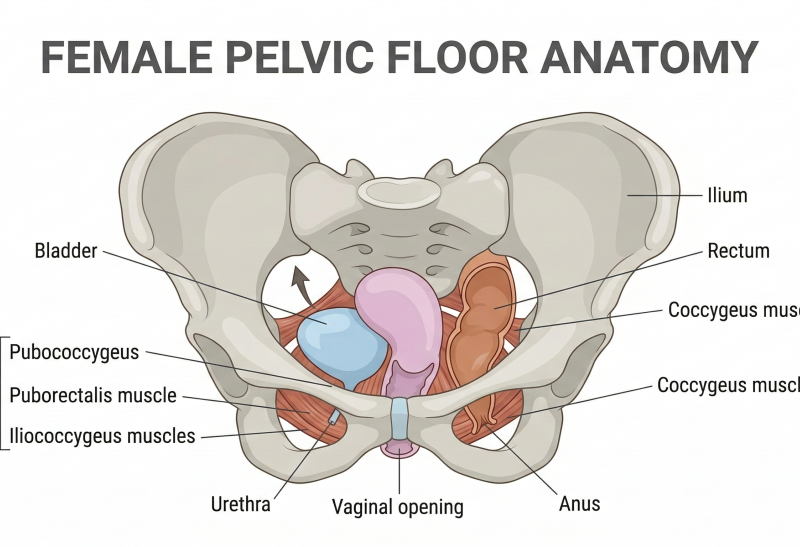
Pelvic health is a vital part of overall well-being, yet it’s often overlooked or discussed in hushed tones. Yoga offers a holistic, mindful approach to both strengthening and softening the pelvic floor, which is key to its functionality.
Understanding your pelvic floor: causes and symptoms
The pelvic floor is a sophisticated "hammock" of muscles and connective tissue that supports your pelvic organs, including the bladder, bowel, and uterus. Like any other muscle group, it can become either too weak (hypotonic) or too tight (hypertonic), both of which lead to discomfort.
Common causes of issues:
- Life transitions: Pregnancy, childbirth, and menopause.
- Physical strain: Chronic coughing, heavy lifting, or high-impact sports.
- Lifestyle factors: Chronic constipation or prolonged sitting.
- Stress: We often hold emotional tension in our hips and pelvic region.
Symptoms to watch for:
- Incontinence: Accidental leaking when sneezing, coughing, or exercising.
- Pelvic organ prolapse: A feeling of heaviness or "bulging" in the pelvic area.
- Pain: Discomfort during intimacy or chronic pelvic pain.
- Frequency: Feeling the urge to use the bathroom more often than usual.
Why yoga is a game-changer for pelvic health
Yoga goes beyond simple "kegels." It teaches the relationship between the breath and the pelvic floor. When you inhale, the diaphragm and pelvic floor naturally descend and relax; when you exhale, they gently lift and contract.
By practicing yoga, you develop proprioception—the ability to actually feel and control these deep internal muscles. This awareness allows you to release "holding patterns" caused by stress and build functional strength that supports you throughout your daily life.
Best yoga poses for the pelvic floor
While many poses are beneficial, these three offer a balanced approach to both stability and release.
| Pose Name | Category | Description |
|---|---|---|
| Malasana (Yogi Squat) | Standing / Hip Opener | A deep squat that helps stretch and lengthen the pelvic floor muscles. It’s excellent for releasing tension and improving hip mobility. |
| Setu Bandha Sarvangasana (Bridge Pose) | Backbend / Inversion | A gentle way to engage the glutes and pelvic floor simultaneously. It helps build "eccentric" strength and stabilizes the pelvis. |
| Viparita Karani (Legs-Up-The-Wall) | Restorative / Inversion | This pose uses gravity to take the pressure off the pelvic organs, allowing the pelvic floor to fully relax and recover from daily strain. |
| Ananda Balasana (Happy Baby Pose) | Restorative | Releases lower back tension and gently massages the spine when rocked |
Which type of yoga is best for the pelvic floor
Not all yoga is created equal when it comes to the pelvic floor. The "best" style depends on whether you need to strengthen or relax.
- For relaxation (hypertonic pelvic floor): Yin Yoga, Restorative Yoga, and Somatic Yoga are the gold standards. They focus on long-held, supported shapes that signal the nervous system to let go of deep-seated tension.
- For stability & alignment: Iyengar Yoga and Hatha Yoga are fantastic because they emphasize precision and the use of props, ensuring you aren't over-straining the pelvic area.
- What to be careful with: High-intensity styles like Ashtanga or fast-paced Vinyasa can sometimes lead to "bearing down" or over-tensing. If you choose these, focus heavily on your breath-to-movement connection.

 Summary